• home
  • vocab
  • tutoring
  • blog
  • help

Make Your Point > Archived Issues > DESOLATE

   Send Make Your Point issues straight to your inbox.

   See this issue on Make Your Point, Jr.


pronounce DESOLATE:


The verb is "DESS uh late," as in "The plague desolated Europe."

And the adjective is "DESS uh lut," as in "The plague left Europe desolate."
Your browser does not support the audio element.


connect this word to others:

The word desolate is close cousins with sole, solo, solitary, soliloquy, and sol____stic.

Can you recall that last one? It means "extremely self-centered, to the point of believing no one else is a real person."

To reveal any word with blanks, give it a click.

definition:

"Desolate" literally means "completely alone." It traces back to the Latin solus, meaning "sole, single, or alone."

"Desolate" can be a verb: to desolate a place is to empty it, to wreck it, or to make it lonely and blank: to wipe out all the people or living things. And to desolate people is to totally wreck their hearts, leaving them feeling empty and alone.

As an adjective, "desolate" describes places that are empty and lonely, with either very few people or things in it, or none at all.

grammatical bits:

Part of speech:

Part of speech:

Both a verb, the transitive kind ("The loss desolated her") and an adjective ("She felt desolate").

Other forms:

The other verb forms are "desolated" and "desolating."

"Desolated" and "desolating" also work well as adjectives: "She felt desolated;" "Her loss was desolating."

The noun is "desolation."

how to use it:

"Desolate" is a formal, common, poetic, dramatic word that helps you express sadness or emptiness that seems vast and soul-crushing.

When using "desolate" as an adjective, we most often talk about desolate places, but we can also describe people, sounds, colors, and moods as desolate.

And when using "desolate" as a verb, we most often talk about events that desolate places (like plagues, famines, and hurricanes) and events (like losses, deaths, and disappointments) that desolate people.

examples:

"The ship looked desolate there upon her side, with no one on her decks, and her thin black funnel pointing to the shore."
  — Daphne du Maurier, Rebecca, 1938

"Even in the depths of the pandemic — even when the world locked down, leaving billions isolated and desolated — there were those who danced."
  — Staff, Associated Press, 16 October 2021

has this page helped you understand "desolate"?


Awesome, I'm glad it helped!

Thanks for letting me know!
If you have any questions about this term, please message me at Liesl@HiloTutor.com.


study it:

Explain the meaning of "desolate" without saying "abandoned" or "lonely."

try it out:

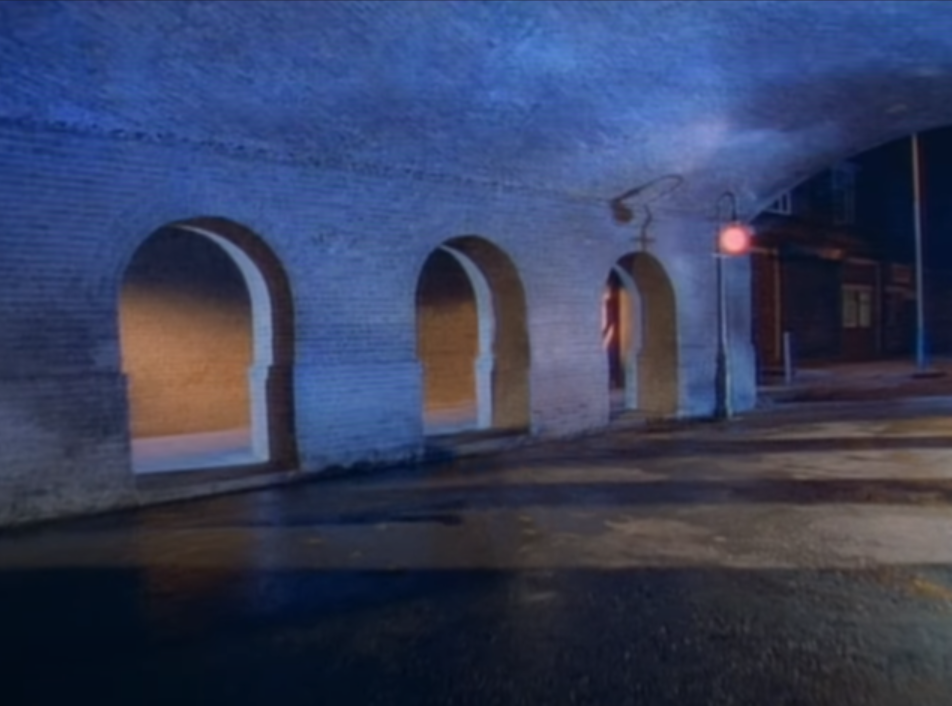
(Source)

There's a popular subreddit called Liminal Spaces, where users share photos of desolate areas, the kind that illustrate "the time between the 'what was' and the 'next.'" Desolate hallways, desolate basements, desolate malls: the photos seem to give people a spooky, nostalgic, unsettling thrill. As one user commented, photos of desolate places are "like... a memory or a dream you forget the minute you wake up."

Is this kind of visual desolation appealing to you, too? Why or why not?


before you review, play:

Try to spend 20 seconds or more on the game below. Don’t skip straight to the review—first, let your working memory empty out.

Our game this month is "Alliterate a Little; It'll Lift It."

I'll give you a phrase that doesn't alliterate, and you'll make it alliterate by changing one or both words—while preserving, as best you can, the meaning of the original. 

For example: A car that demands too much fuel is a "gas guzzler." But what alliterative term could you invent for a dishwasher that demands too much detergent?

You could call it a "soap slurper," or a "detergent devourer."

Try this one today...

We appreciate a "helping hand." But, what alliterative term could you invent for "moral support"?

To see one possible answer, scroll all the way down.

review this word:

1. One opposite of DESOLATE is

A. EAGER.
B. ARTISTIC.
C. BUSTLING.

2. The speaker in Edgar Allan Poe's "The Raven" rambles eloquently at the bird:
"Whether Tempter sent, or whether tempest tossed thee here ashore,
    Desolate yet all undaunted, on this _____ land enchanted—
    On this home by Horror haunted—tell me truly, I implore—
Is there—is there balm in Gilead?"


A. sylvan
B. desert
C. lavish


Answers to the review questions:
1. C
2. B

From the game:
Any alliterative label you came up with is great! Mine is "soul support."


a final word:


I hope you're enjoying Make Your Point. It's made with love.

I'm Liesl Johnson, a reading and writing tutor on a mission to explore, illuminate, and celebrate words.


From my blog:
On vocabulary...
      36 ways to study words.
      Why we forget words, & how to remember them.
      How to use sophisticated words without being awkward.
On writing...
      How to improve any sentence.
      How to motivate our kids to write.
      How to stop procrastinating and start writing.
      How to bulk up your writing when you have to meet a word count.

From my heart: a profound thanks to the generous patrons, donors, and sponsors that make it possible for me to write these emails. If you'd like to be a patron or a donor, please click here. If you'd like to be a sponsor and include your ad in an issue, please contact me at Liesl@HiloTutor.com.


A disclaimer:
When I write definitions, I use plain language and stick to the words' common, useful applications. If you're interested in authoritative and multiple definitions of words, I encourage you to check a dictionary. Also, because I'm American, I stick to American English when I share words' meanings, usage, and pronunciations; these elements sometimes vary across world Englishes.

Subscribe to "Make Your Point" for a daily vocabulary boost.


© Copyright 2026 | All rights reserved.