• home
  • vocab
  • tutoring
  • blog
  • help

Make Your Point > Archived Issues > WUNDERKAMMER

Send Make Your Point issues straight to your inbox.


pronounce WUNDERKAMMER:

VOON dah kom ah.

If you want to anglicize it (like we've done for words like "wanderlust"), then you could say it phonetically: "WUN dur kam ur."
Your browser does not support the audio element.

connect this word to others:

A wunderkammer is a room or cabinet of wonders. Thanks, German!

Related: Katharine, a reader, recently asked if I knew of a "long German word for thinking you look great when you leave the house but regretting the whole look when you see yourself in the office bathroom." And, sadly, I don't! Does anyone know that word? Do we have any native speakers of German who can invent one for us? 

Luckily, we do have some other delightfully specific German words in stock:

1. You could call something secondhand shame, or fr___scham.

2. You could call something the general spirit of the times, or the z___g___st.

3. You could call something that thing where you have to make a move even though any move will be bad for you, or Z__zw___.

4. You could call something that feeling of worrying that you're getting too old to take advantage of certain opportunities in life, or T__schl___p___k.

5. And as we're about to explore, you could call something a cabinet of curiosities, or a wunderkammer.

(To reveal any word with blanks, give it a click.) 

definition:

"Wunderkammer" is German for "room of wonders."

It's a nice, tidy word that we can use in English to mean "a room, a cabinet, or a collection of strange and wonderful things."

grammatical bits:

Part of speech:

Noun: "Dorothy steps into the Nome King's wunderkammer, determined to rescue her friend, the Scarecrow, who's been transformed into an ornament."

Other forms: 

None seem to be in use in English.

If you need a plural, you could use the German "Wunderkammern," or go ahead and anglicize it into "wunderkammers."

It's possible that some alternate German forms might become more popular here over time, like "Kunstkammer" (literally "room of curiosities") or "Kunstkabinett" ("cabinet of curiosities").

how to use it:

If you're not afraid to use a rare, foreign term, then reach for the beautiful "wunderkammer" to describe someone's cabinet or collection of oddities.

You won't find it in English dictionaries. (At least, not today, in 2023.) But if you use it in English, especially in print, you'll be popularizing it, which may eventually secure a place for it in our dictionaries. Exciting!

Like with most German nouns that we've borrowed, you could choose to capitalize it to emphasize its foreignness, or go ahead and use a lowercase for it to treat it like any other English common noun.

You might describe some exhibit, museum, wine cellar, music library, or board game collection as a wunderkammer, especially to emphasize its strangeness or grandeur.

examples:

"Wunderkammern held natural and artificial things together on shelves in close conjunction: pieces of coral; fossils; ethnographic artefacts; cloaks; miniature paintings; musical instruments; mirrors; preserved specimens of birds and fish; insects; rocks; feathers... Their disparate contents spoke to one another of their similarities and differences in form, their beauties and manifest obscurities."
   — Helen Macdonald, Vesper Flights, 2020

"The story's emotional cogs and gears move both inevitably and mysteriously, creating a sort of narrative wunderkammer you may find yourself staring into as if into a nightmarish mirror."
 — Francisco Goldman, Electric Literature, 7 August 2023

has this page helped you understand "wunderkammer"?


Awesome, I'm glad it helped!

Thanks for letting me know!
If you have any questions about this word, please message me at Liesl@HiloTutor.com.


study it:

Explain the meaning of "wunderkammer" without saying "cabinet of wonders" or "room of curiosities."

try it out:

In stories, the wunderkammer seems to be a popular trope. (That is, it's an idea that gets used over and over.)

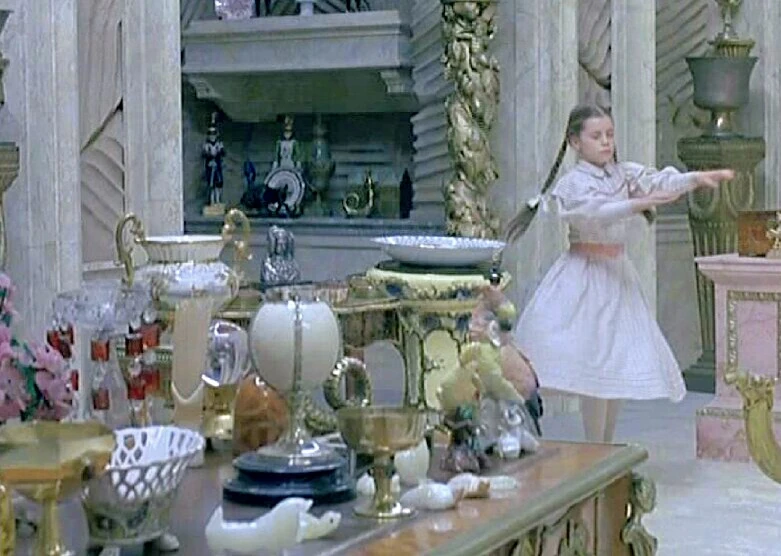
For example, there's the Cave of Wonders from Aladdin, packed with riches, a flying carpet, and a bottle with a wish-granting genie. There's Ariel's secret grotto from The Little Mermaid, filled with mysterious human artifacts from sunken ships, like a pipe and a fork. And I mentioned this one a moment ago: the Nome King's ornament collection from Return to Oz, rooms and rooms cluttered with odd objects on endless end tables, which creeped me out when I was a kid but now just reminds me of a T. J. Maxx.

(Source)

With these examples in mind, talk about why you think so many stories feature a wunderkammer. Why is it so useful for the narrative, for the characterization, or for the visuals?


before you review, play:

Try to spend 20 seconds or more on the game below. Don’t skip straight to the review—first, let your working memory empty out.

Our game this month is "Market That Makeup!"

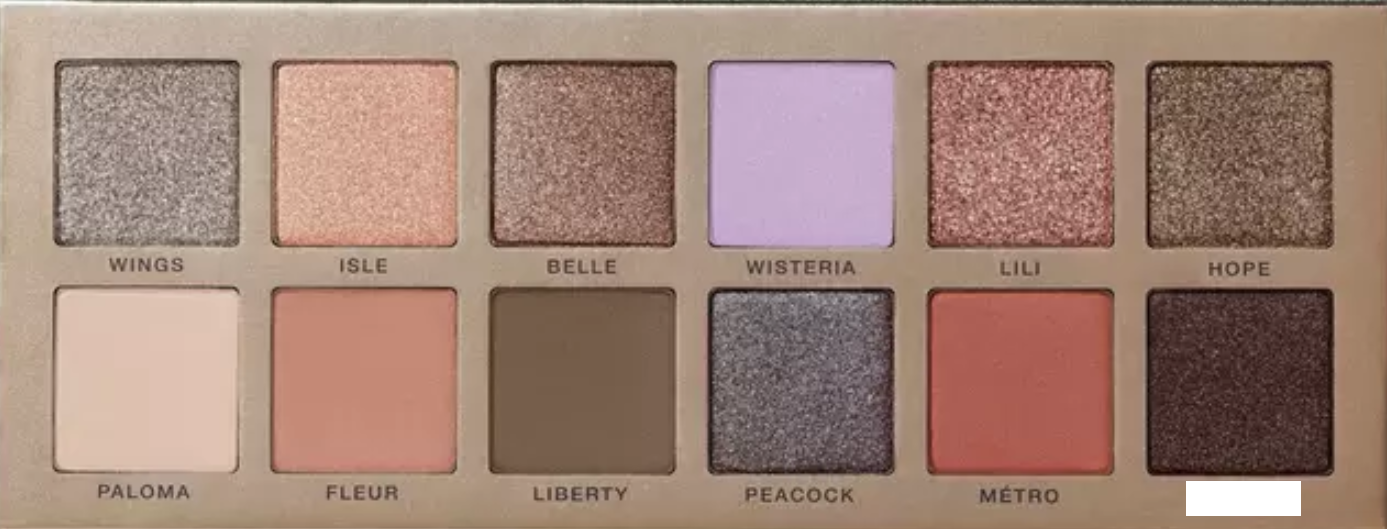
Check out the names given to the shades in a palette, and decide what to call the shade with the missing name. You might channel the vibe established by the other shade names, or just pick the weirdest or most grandiloquent name you can think of. To see the shade's real name—the one that the marketing team picked—scroll all the way down. 

Try this one today:

Anastasia Beverly Hills's "Nouveau Palette" includes shades like "hope," "metro," "wisteria," "peacock," and "isle."

Invent a name for the shade on the bottom row, far right:

(Source)

review this word:

1. One opposite of a WUNDERKAMMER could be

A. a vast, empty BALLROOM.
B. a bright, delicate BUTTERFLY.
C. a soulless, glassy-eyed VENTRILOQUIST'S DUMMY.

2. Open a wunderkammer, and you might find _____.

A. your own reflection
B. a large brown woody pit
C. poached elephant tusks and silk headdresses


Answers to the review questions:
1. A
2. C

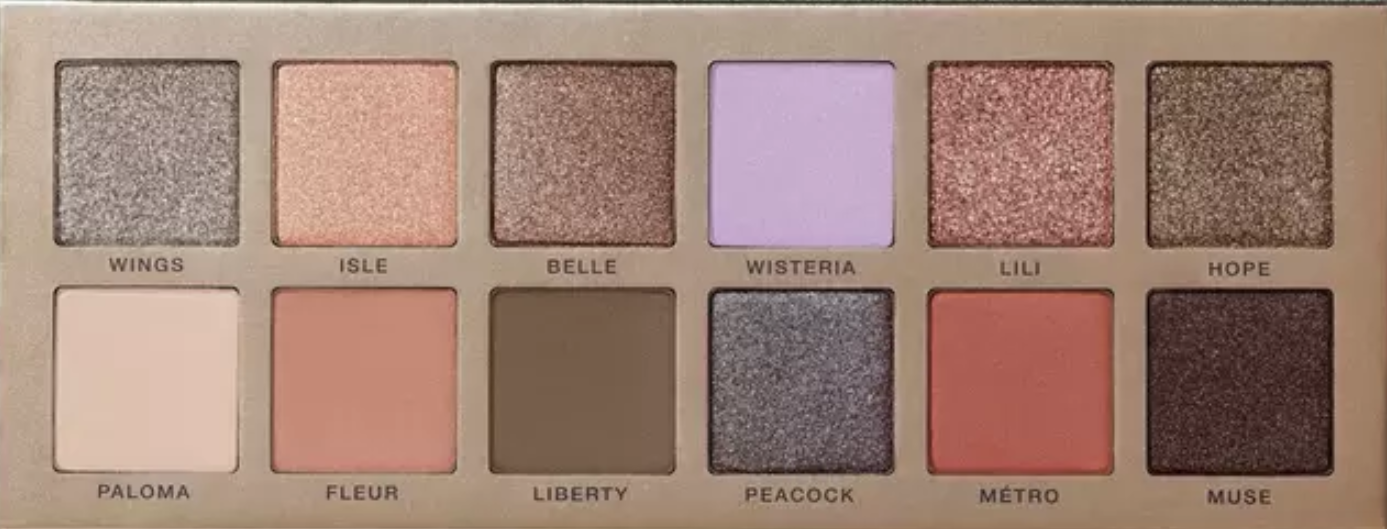
Answer to the game question: Any name you chose is great! The company chose "muse."

(Source)


a final word:

I hope you're enjoying Make Your Point. It's made with love. I'm Liesl Johnson, a reading and writing tutor on a mission to explore, illuminate, and celebrate words.

From my blog:
On vocabulary...
      36 ways to study words.
      Why we forget words, & how to remember them.
      How to use sophisticated words without being awkward.
On writing...
      How to improve any sentence.
      How to motivate our kids to write.
      How to stop procrastinating and start writing.
      How to bulk up your writing when you have to meet a word count.

From my heart: a profound thanks to the generous patrons, donors, and sponsors that make it possible for me to write these emails. If you'd like to be a patron or a donor, please click here. If you'd like to be a sponsor and include your ad in an issue, please contact me at Liesl@HiloTutor.com.


A disclaimer:
When I write definitions, I use plain language and stick to the words' common, useful applications. If you're interested in authoritative and multiple definitions of words, I encourage you to check a dictionary. Also, because I'm American, I stick to American English when I share words' meanings, usage, and pronunciations; these elements sometimes vary across world Englishes.

Subscribe to "Make Your Point" for a daily vocabulary boost.


© Copyright 2023 | All rights reserved.